Column · @safeentryliving
Rekeying or Replacing Commercial Door Locks: Which Option Fits Your Business?
When a Key Is No Longer Enough
A commercial property faces many scenarios that call for a change in who can get through a door. An employee leaves on uncertain terms, a master key goes missing, or a tenant moves out. In each case the question becomes whether to rekey the existing locks or to install new hardware entirely. The choice affects security, convenience, and the overall cost of managing access for the building. Understanding what each approach involves and when it makes sense can help a business owner or facility manager make a sound decision.
What Rekeying Means for a Commercial Door
Rekeying changes the internal pin configuration of a lock cylinder so that old keys no longer work, while the lock body and the rest of the hardware remain in place. A locksmith removes the cylinder, inserts a new set of pins that match a different key pattern, and reinstalls the cylinder. The door, the strike plate, the latch, and the lock housing stay as they are. For a business with multiple doors on the same key system, rekeying can bring all cylinders into alignment with a single new master key, restoring control without replacing every lock.
This process is often the faster and less disruptive option. There is no need to cut new holes in the door or adjust the prep work already done for the existing hardware. The door continues to operate with the same handle set, deadbolt, and exit device. For a commercial space that operates during regular hours, the downtime can be limited to a short visit from a locksmith.
When Rekeying Works Best
Rekeying suits a situation where the existing hardware is in good condition and the security issue is limited to key control. If a single key fob or a master key has been lost, rekeying the affected cylinders to a new key schedule restores confidence. It is also a practical choice when a business wants to maintain the same brand or style of hardware across the building to keep a uniform appearance and avoid mismatched finishes.
Another common use is after a change in occupancy. A landlord or property manager can have all locks rekeyed between tenants without the expense of replacing every lock. This keeps the building secure while keeping the capital outlay low. For a multi-tenant building, rekeying can also support a master key system where the landlord holds one key that opens every unit, while each tenant has a key that opens only their own door.
Limitations of Rekeying
Rekeying does not address physical wear or damage to the lock body. If the cylinder turns with resistance, the latch sticks, or the handle wobbles, rekeying will not fix those problems. The lock mechanism still has the same internal parts and the same level of resistance to forced entry. For a door that sees heavy use or shows signs of tampering, rekeying may only postpone a necessary replacement.
When Replacing the Lock Makes More Sense
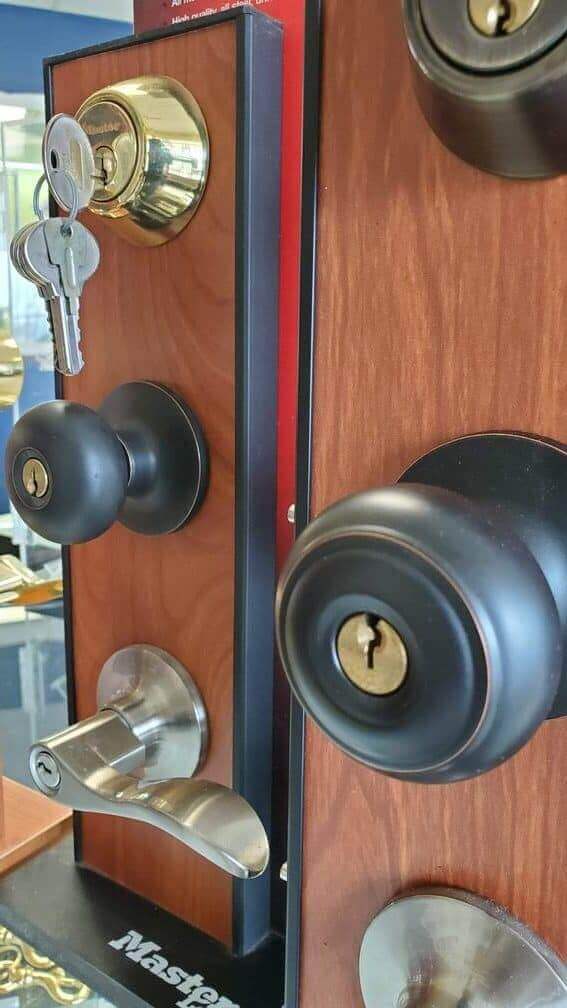
Replacing a commercial door lock means removing the entire assembly and installing a new lock set. This can range from swapping a single cylinder and deadbolt to replacing a full mortise lock or an exit device with integrated lock. The new hardware may be the same model as the old one, or it may be an upgrade that offers better security, a different key system, or electronic access control.
Replacement is the clear choice when the existing lock is worn out, outdated, or no longer fits the security needs of the business. A lock that has been in service for many years may have loose internal components that make it easier to pick or bypass. Replacing it with a modern lock that meets current industry standards provides a fresh start.
Upgrading the Key System
Sometimes the reason to replace goes beyond wear. A business that has been using a standard key system may want to move to a restricted key system, where key blanks are only available to authorized holders. A restricted key system can reduce the risk of unauthorized duplication. Switching to such a system often requires new cylinders that accept only the restricted key blanks, so replacement is necessary.
Another scenario is the move to electronic access control. A business that wants to manage access through key cards, fobs, or mobile credentials will need to replace mechanical locks with electronic hardware. This upgrade also allows an access schedule, where doors can be set to unlock only during certain hours, and a key register that tracks who entered and when. For a growing business, this level of control can be a significant improvement over a purely mechanical system.
Matching Hardware to the Door
Commercial doors vary widely in their prep configuration. A replacement lock must match the existing cutouts for the lock body, the latch, and the strike. If the door has a standard prep, finding a compatible lock is straightforward. If the door has an unusual or older prep, the replacement may require additional modifications to the door frame or the door edge. A locksmith can assess the door and recommend a lock that fits without major alterations.
Okey Locksmith is also on Facebook.
For doors that use an exit device, such as a panic bar, the lock is often integrated into the bar assembly. Replacing that type of lock means replacing the whole exit device, which must be listed for life safety and meet local building codes. This is not a job for a general handyman; it requires a professional who understands the requirements for commercial egress.
Comparing the Costs and Benefits
Rekeying is generally the more affordable option in the short term because it uses the existing hardware and requires less labor. The cost of a rekey is mainly the locksmith's time and the price of the new key pins. Replacement involves the cost of the new lock set plus installation labor, which can be higher if the door needs modifications.

The phrase "business lock installation" often comes up when a property manager is weighing these two approaches. A well-planned business lock installation can incorporate rekeying for some doors and replacement for others, depending on the condition of each lock. The key is to evaluate each door individually rather than applying a blanket solution.
However, cost should not be the only factor. Rekeying an old lock that is nearing the end of its service life may lead to a failure later, requiring an emergency replacement that could have been avoided. In contrast, investing in a new lock now can provide years of reliable service and better security features. A business that plans to stay in the same location for a long time may find replacement a better long-term value.
Making the Decision for Your Property
Start with an inspection of every lock on the property. Look for signs of wear: a key that sticks, a latch that does not fully extend, a handle that feels loose. Check the age of the hardware and whether it still matches the security needs of the business. If the lock is in good shape and the only issue is key control, rekeying is the logical step. If the lock is worn, damaged, or no longer adequate for the security level required, replacement is the better path.
For businesses that manage multiple doors, a master key system can simplify access for employees and managers. Rekeying can align all doors to a single master key while keeping individual keys restricted to each door. If the existing hardware does not support a master key system, replacement with hardware that does may be worth the investment.
Another factor is the future of the building. If a renovation is planned in the next year or two, it may make sense to rekey now and replace during the renovation, rather than replacing twice. On the other hand, if the building will remain as it is for the foreseeable future, replacing worn locks now avoids the risk of a failure during business hours.
The second use of the phrase "business lock installation" appears here because a comprehensive approach to security often involves both rekeying and replacement. A professional locksmith can evaluate the property and recommend a plan that fits the budget and the security requirements. The goal is to have a system that works reliably, keeps unauthorized people out, and allows authorized people easy access.
Final Considerations
No matter which path you choose, work with a qualified locksmith who understands commercial hardware. Residential locks are simpler and less robust than commercial locks, and the wrong choice can create a safety hazard or a security gap. A reputable locksmith will know the differences between grades of commercial locks and can advise on the right level of security for your type of business.
Keep records of your key system, including which keys open which doors and who holds each key. A key register helps track key distribution and makes it easier to rekey only the affected doors if a key is lost. For electronic systems, keep a log of credentials issued and revoked, and change access schedules as your staffing needs change.
Okey Locksmith, located at 3121 SW 29th St, Oklahoma City, OK 73119, USA, can be reached at +1 405-703-8943. Okey Locksmith provides 24/7 mobile automotive, residential, commercial, access control, and emergency locksmith services in Oklahoma City and nearby communities. Whether you need a quick rekey or a full lock replacement, a professional assessment of your commercial doors will help you make the right call for your business.